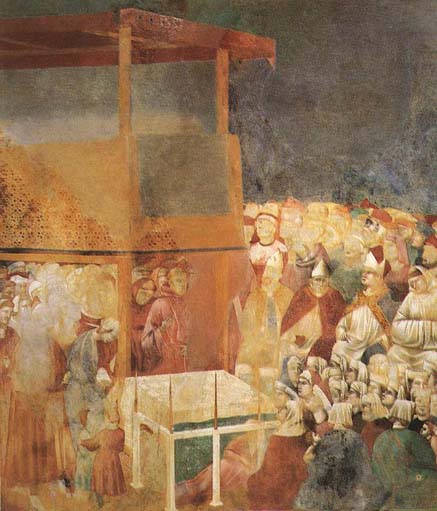
Canonization of St Francis Giotto 1300
Fresco 270 x 230 Basilique

Giotto's authorship of some parts of the last scenes is often questioned, and in the case of those in the last bay (after No. 25, usually attributed to the St Cecilia Master) denied completely. In the Canonization of St Francis, despite its damaged condition, we can still perceive the splendid arrangement of the group of onlookers, lead naturally to a consideration of the style of dress Giotto adopted for his lay figures, both male and female - a consideration which can also be extended to other scenes such as the Homage of a Simple Man and the Renunciation of Worldly Goods. He evidently thought it incongruous to use the semi-classical dress customary for biblical scenes in representations of events that were almost contemporary. He therefore dressed his lay figures in contemporary clothing, just as he had made the buildings in the scenes reflect contemporary architecture. This idea was so successful that it inspired artists of the next two centuries to introduce figures in contemporary dress into their works frequently, even when representing events that were not contemporary. In considering the stylistic differences between the upper wall frescoes and the Legend of St Francis (or between the latter and the Paduan frescoes), we should bear in mind the realistic effect created by the use of contemporary dress.