|
 |
 |
 |
 |
 |
 |
La Maesta

 |
 |
 |
 |
 |
 |
 |
 |
 |
 |
 |
 |
 |
 |
 |
 |
 |
 |
 |
 |
 |
 |
 |
 |
 |
 |
 |
 |
 |
 |
 |
 |
 |
 |
Duccio di Buoninsegna, 1308-11
Détrempe sur bois 214 x 412 cm (recto)
Museo dell'Opera del Metropolinata, Sienne
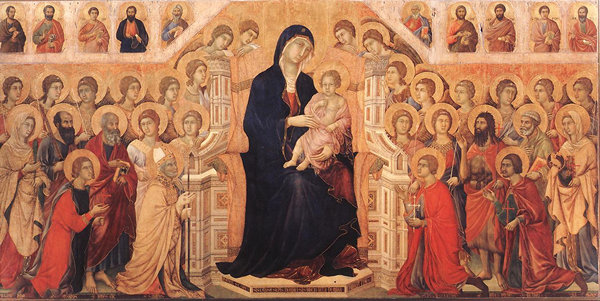
En 1308, Duccio achève et couronne sa carrière par cette commande monumentale pour le maître-autel de la cathédrale de Sienne. Elle fut réalisée en trois ans et livrée en procession solannele, en 1311, en musique, de l'atelier du Duccio au Duomo. L'évènement occasiona même la fermeture exceptionnelle de toutes les boutiques de la ville !
La Maesta réussit la fusion parfaite de la préciosité de l'art byzantin avec le lyrisme du gothique. cette rupture nette avec la sévérité du style bizantin symbolisera pour les deux siècles suivant le style de la peinture siennoise.
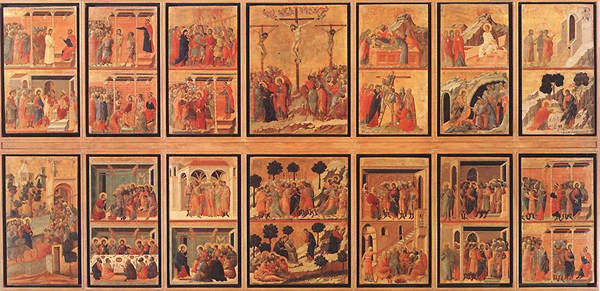
Le tableau est resté le maître-autel de la Cathédrale de Siene jusqu'à 1505. Plus tard les panneaux de la predelle ont été séparées. La plupart sont aujourd'hui revenus au Museo dell'Opera del Duomo mais certains ont disparus ou sont conservés dans des musées étrangers (L'annonciation à la National Gallery).
La Madone apparaît comme la Reine du Ciel et de Sienne. Au premier plan les quatre saints patrons de Sienne sont agenouillés. Si le panneau central pouvait être vu de l'ensemble des fidèles, les petits tableaux qui la couronne et ceux de la predelle ne pouvait être vus que des officiants. De même le dos du rétable, exposé aujourd'hui face à la Maesta, racontant en 26 panneaux la Passion du christ, n'était vu qu'en des occasions solanelles.
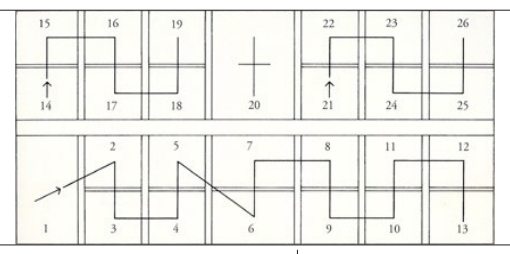
1. L’Entrée à Jérusalem 2. Le Lavement des pieds 3. La Cène 4. Le Christ prend congé des Apôtres 5. La Trahison de Judas 6. La Prière sur le mont des Oliviers 7. L’Arrestation de Jésus 8. Jésus devant Anne 9. Le premier reniement de Pierre 10. Jésus devant Caïphe 11. Le Christ bafoué 12. Le Christ accusé par les Pharisiens 13. Jésus devant Pilate 14. Jésus devant Hérode 15. Le deuxième interrogatoire par Pilate 16. La Flagellation 17. Le Couronnement d’épines 18. Pilate se lave les mains 19. La Montée au calvaire 20. La Crucifixion 21. La Déposition 22. La Mise au tombeau 23. Les Saintes Femmes au tombeau 24. La Descente aux Limbes 25. Noli me Tangere 26. Le Chemin vers Emmaüs
L'inscription latine sur la base du trône contient le nom du peintre.